Our Condolences Will Continue After Death Theories
Shaykh Ibrahim Mogra sits on the Muslim Council of Britain's National Council and is an imam in Leicester.
"Muslims believe that this life is a temporary one. There is an eternal life that follows after death, so when a person dies their soul moves on to another world. On the Day of Resurrection the soul will be returned to a new body and people will stand before God for judgement. Those who have believed in God and have pleased him through good works will be rewarded with Heaven, or paradise, where they shall live for eternity. Those who have disobeyed God will be punished in Hell. For some this will only be temporary, like a 'cleansing period' where they will be cleansed of their sins before coming to Heaven."
By knowing that death is near, Muslims believe we have been given time to make peace with our loved ones and time to prepare for death.
"Muslims believe that life in Heaven will be very different. For example, in this life we sleep to rest and eat to survive, whereas in the afterlife Muslims believe these things will be done for pleasure only, not out of necessity. We'll experience pleasures that can't be compared to those in our current life.
"As death is seen as part of a journey, one that must be taken in order to reach the eternal afterlife and be with God, many Muslims see death as a gift from God. That's not to say that we seek death, as good health is also seen as a gift from God and therefore it's a Muslim's duty to look after our health.
"In Islam we have a prayer which says, 'God please save me from a sudden death'. This isn't asking to become ill be any means. Instead it allows us to recognise that by becoming ill and understanding that death is near, we have been given time to make peace with our loved ones and prepare for death.
"A Muslim will take this time to ensure that if they owe anyone anything, they can make sure this debt is settled. They can repay any borrowed money, and make sure their will is in place so their dependents and loved ones are taken care of."
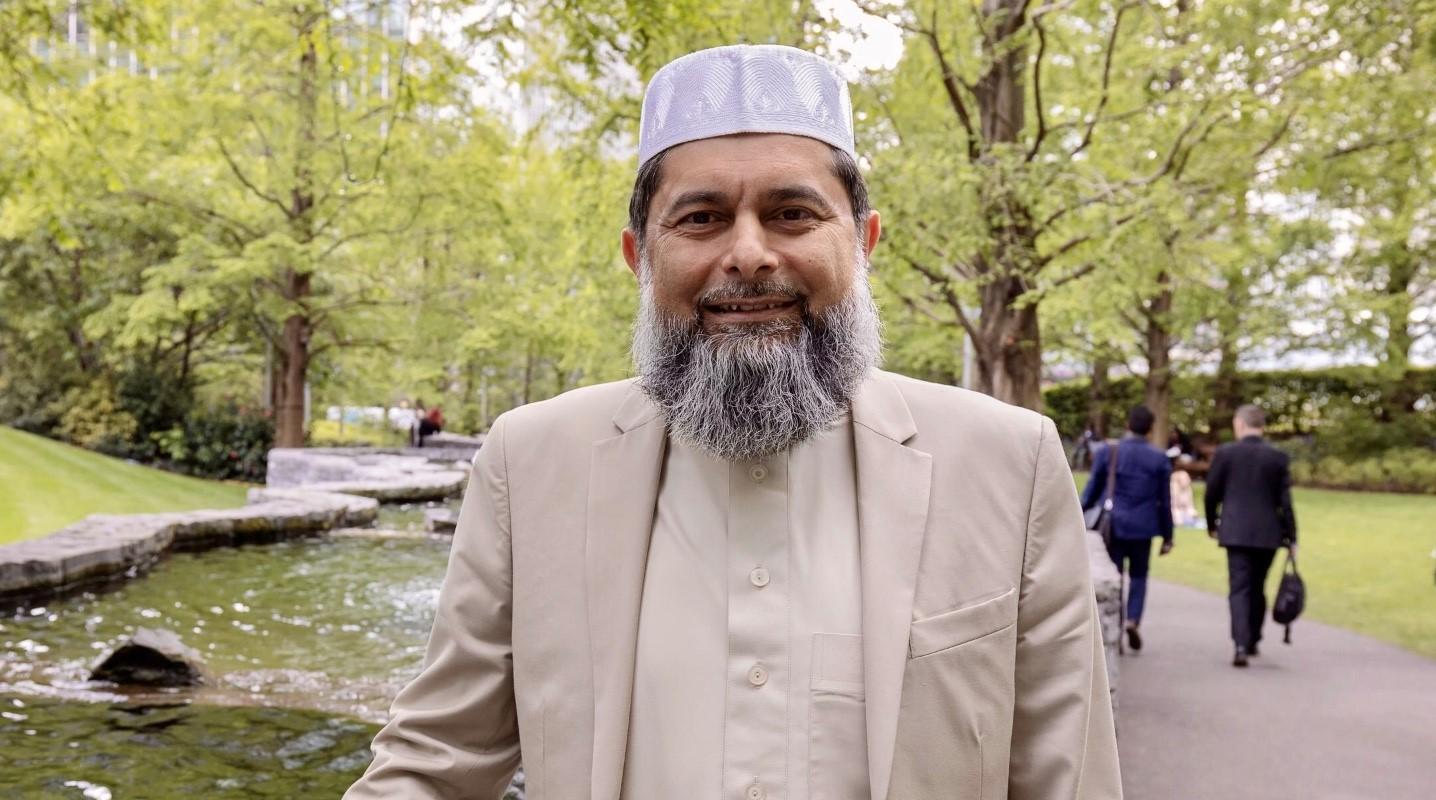
Shaykh Ibrahim Mogra also spoke to Talkabout to explain condolence sayings from different cultures
Dr Desmond Biddulph was trained in the Rinzai School of Zen Buddhism and is the president of The Buddhist Society.
"For most Buddhists, the belief about where you go when you die is not that you go somewhere else, but rather that you are reborn as something and someone completely different. The idea of rebirth has been around for a very long time, since pre-Buddhist times. It was taken on board by The Buddha, and the idea of a cycle of birth and rebirth became part of his teachings.
"Buddhists believe that how you behave in this life gives conditions for your later lives. It's important to remember though how Buddhists believe it's not 'you' that is reborn. It's something else, another entity, another essence, which is dependent on your behaviour.
"For many Buddhists, death isn't seen as an end, but rather a continuation. We believe you go from life to life, so this can help Buddhists move away from a fear of death, and instead see it as just another part of their journey which they must take.
"We also make an effort to make death as painless as possible – both for ourselves and our family members – as this will be part of the behaviour I mentioned which will impact your next life. This means Buddhists often want to ensure their affairs are in order and that their families are cared for before they die, as they know that in their next life they won't be able to do this."
David Cunningham-Green is a member of Atheism UK
"As an atheist I do not have 'beliefs'. A belief is by definition not a fact, it is an unproven wish. Living in certain ways because the religious want to gain favour with their god or want to avoid her/his displeasure is one an atheist eschews. Atheists naturally do not believe in any form of existence after death. Most people would not suggest that their pets continue to have existence after death and we see no evidence that humans are different. When I die it means that I cease to be.
"That doesn't mean atheists don't think about death. Like most people an atheist will probably not want to die slowly, in agony, or causing distress to those around them. Many religions claim there is a downside to the afterlife, notably Hell in the Christian religion. Atheists do not accept that there is an afterlife so do not have a future in it to fear. An atheist sees death as a full-stop, so it is the process of dying that matters".
For many atheists it's important to make sure their death is comfortable and that it doesn't lead to further suffering or difficulties for their loved ones.
"If you are a theist (a follower of religion) you may have a 'shield' that says suffering is temporary compared to what awaits you in the afterlife. Atheists don't have this, so they will often be more concerned about making sure their death is comfortable for them and their loved ones.
"As people who don't think there is a God waiting for them, atheists can approach death knowing that their actions aren't for anyone other than themselves and the people they love. That's why for many atheists it's important to make sure their death is comfortable and that it doesn't lead to further suffering or difficulties for their loved ones."
burlingthavengetter.blogspot.com
Source: https://www.mariecurie.org.uk/talkabout/articles/where-do-we-go-when-we-die/287832
0 Response to "Our Condolences Will Continue After Death Theories"
Post a Comment